
 100% Safe and Secure
 Instant and Accurate Calculation
 User Friendly
30 days free trial
Shift your Account diary on jama Udhar Mobile Application

 100% Safe and SecureInstant and Accurate CalculationUser Friendly
Shift your Account diary on jama Udhar Mobile Application
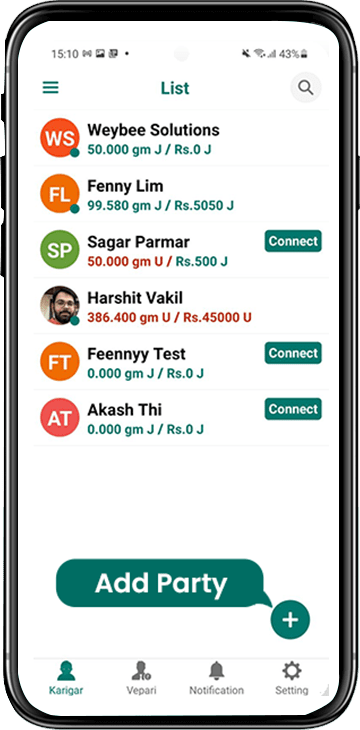
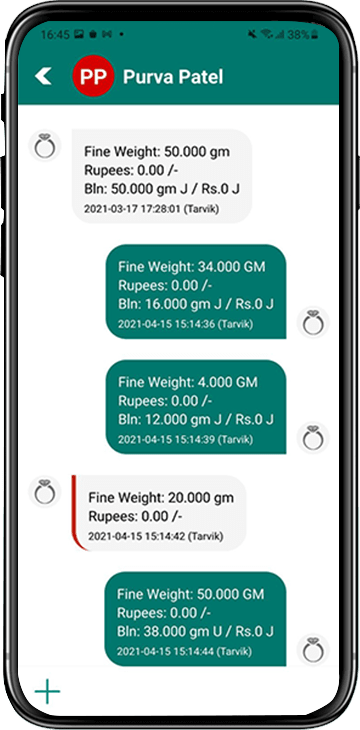

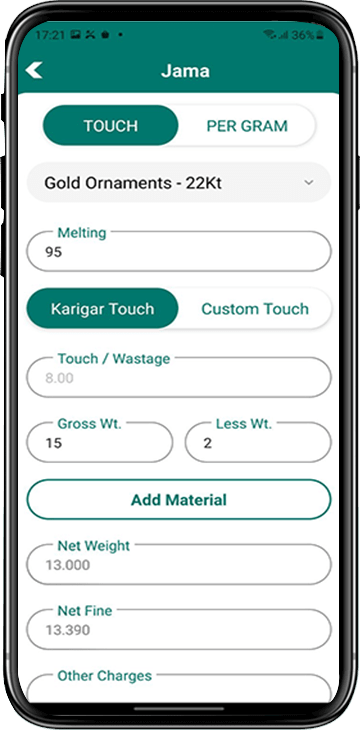
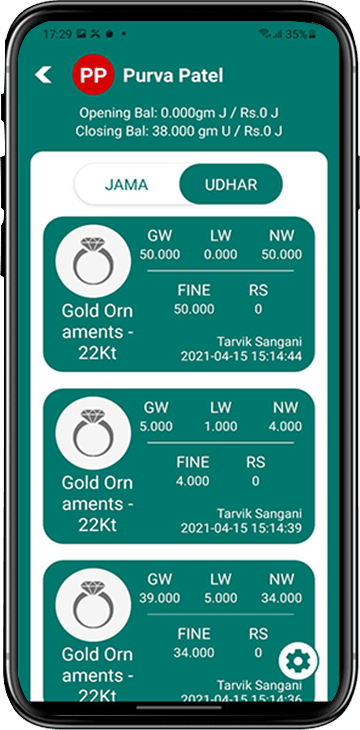

Your mistakes and easily be resolved with Jama Udhar!

All the details you need to know with visuals will be mentioned.

We maintain the records of your data unless you delete it!

You get notified for every activity on the application as fast as you can think!

You can share the details of your transaction with your co-workers and colleagues easily.

You can slide into any module and do your transaction without any hassle.

You can easily connect with your colleagues, and do smooth transactions!

We provide 24*7 support
Your mistakes and easily be resolved with Jama Udhar!
All the details you need to know with visuals will be mentioned.
We maintain the records of your data unless you delete it!
You get notified for every activity on the application as fast as you can think!
You can share the details of your transaction with your co-workers and colleagues easily.
You can slide into any module and do your transaction without any hassle.
Your mistakes and easily be resolved with Jama Udhar!
We provide 24*7 support
Your mistakes and easily be resolved with Jama Udhar!
All the details you need to know with visuals will be mentioned.
We maintain the records of your data unless you delete it!
You get notified for every activity on the application as fast as you can think!
You can share the details of your transaction with your co-workers and colleagues easily.
You can slide into any module and do your transaction without any hassle.
Your mistakes and easily be resolved with Jama Udhar!
We provide 24*7 support
This paper presents , a next-generation network protocol designed to bridge the operational gap between the reliability of TCP unicast and the efficiency of IP multicast. As distributed systems evolve—particularly in the context of Financial Trading (HFT), Edge Computing, and Industrial IoT—the traditional dichotomy between point-to-point and point-to-multipoint communication has become a performance bottleneck. μCast v461 introduces a "Micro-Cast" architecture, utilizing a kernel-bypass friendly payload structure, forward error correction (FEC) at the transport layer, and a dynamic subscription matrix. This document details the v461 frame structure, the negative-acknowledgment (NACK) recovery mechanism, and its application in high-frequency environments.
Navigating the Features, Setup, and Applications of the UCAST V461
At its foundation, the UCAST V461 is designed around a high-efficiency processing architecture capable of handling low-latency video compression while simultaneously managing multiple network interfaces. Video and Audio Processing
The is a specialized firmware or software version typically associated with uCast mobile content management systems and legacy receiver integrations, providing users with a streamlined interface for managing dynamic mobile app content and multimedia streaming . While "V461" is also a model designation for certain home theater hardware like the Yamaha RX-V461, the uCast ecosystem focuses on bridging the gap between administrators and mobile end-users through real-time updates and unified communication. The Role of uCast in Modern Content Management
The UC-Cast's feature set makes it an ideal solution for a variety of professional environments. Its versatility across applications—from menus and sales to announcements and directories—fits diverse commercial environments. The device's strength lies in its ability to turn an ordinary display into a smart, connected asset. Here are some of its primary applications.
Local localized monitoring, client access, and field parameter configuration. Wide DC Voltage Tolerance
The uCAST V461 serves as a bridge between central administrative dashboards and multi-display environments. Unlike standard consumer casting devices, it is tailored specifically for the rigorous demands of enterprise visual deployment. Hardware and Signal Processing
This paper presents , a next-generation network protocol designed to bridge the operational gap between the reliability of TCP unicast and the efficiency of IP multicast. As distributed systems evolve—particularly in the context of Financial Trading (HFT), Edge Computing, and Industrial IoT—the traditional dichotomy between point-to-point and point-to-multipoint communication has become a performance bottleneck. μCast v461 introduces a "Micro-Cast" architecture, utilizing a kernel-bypass friendly payload structure, forward error correction (FEC) at the transport layer, and a dynamic subscription matrix. This document details the v461 frame structure, the negative-acknowledgment (NACK) recovery mechanism, and its application in high-frequency environments.
Navigating the Features, Setup, and Applications of the UCAST V461 ucast v461
At its foundation, the UCAST V461 is designed around a high-efficiency processing architecture capable of handling low-latency video compression while simultaneously managing multiple network interfaces. Video and Audio Processing This paper presents , a next-generation network protocol
The is a specialized firmware or software version typically associated with uCast mobile content management systems and legacy receiver integrations, providing users with a streamlined interface for managing dynamic mobile app content and multimedia streaming . While "V461" is also a model designation for certain home theater hardware like the Yamaha RX-V461, the uCast ecosystem focuses on bridging the gap between administrators and mobile end-users through real-time updates and unified communication. The Role of uCast in Modern Content Management This document details the v461 frame structure, the
The UC-Cast's feature set makes it an ideal solution for a variety of professional environments. Its versatility across applications—from menus and sales to announcements and directories—fits diverse commercial environments. The device's strength lies in its ability to turn an ordinary display into a smart, connected asset. Here are some of its primary applications.
Local localized monitoring, client access, and field parameter configuration. Wide DC Voltage Tolerance
The uCAST V461 serves as a bridge between central administrative dashboards and multi-display environments. Unlike standard consumer casting devices, it is tailored specifically for the rigorous demands of enterprise visual deployment. Hardware and Signal Processing
© Copyright 2021, Jama Udhar all right reseved